A missed radio call can cost far more than a lap time. If a driver reports a vibration, a tyre issue or a change in balance and the message is lost under garage noise, the team loses time diagnosing the problem. A mechanics headset for racing is therefore not a general workshop accessory. It is part of the team communications system and must work with the radio, push-to-talk arrangement and connector standard already in use.
The right choice starts with compatibility, then considers how the headset will be worn and used during an event. Clear audio matters, but it is only useful when the connector, lead length, PTT and radio interface are correct for the crew member’s job.
What a mechanics headset for racing must do
A pit or garage headset has a different role from a driver helmet kit. It needs to keep a mechanic, engineer or tyre technician connected while they move around the car, work in a noisy bay and speak to a driver or pit wall without removing hearing protection. It must also tolerate repeated handling, cable pulls, damp conditions and the inevitable rush of a live session.
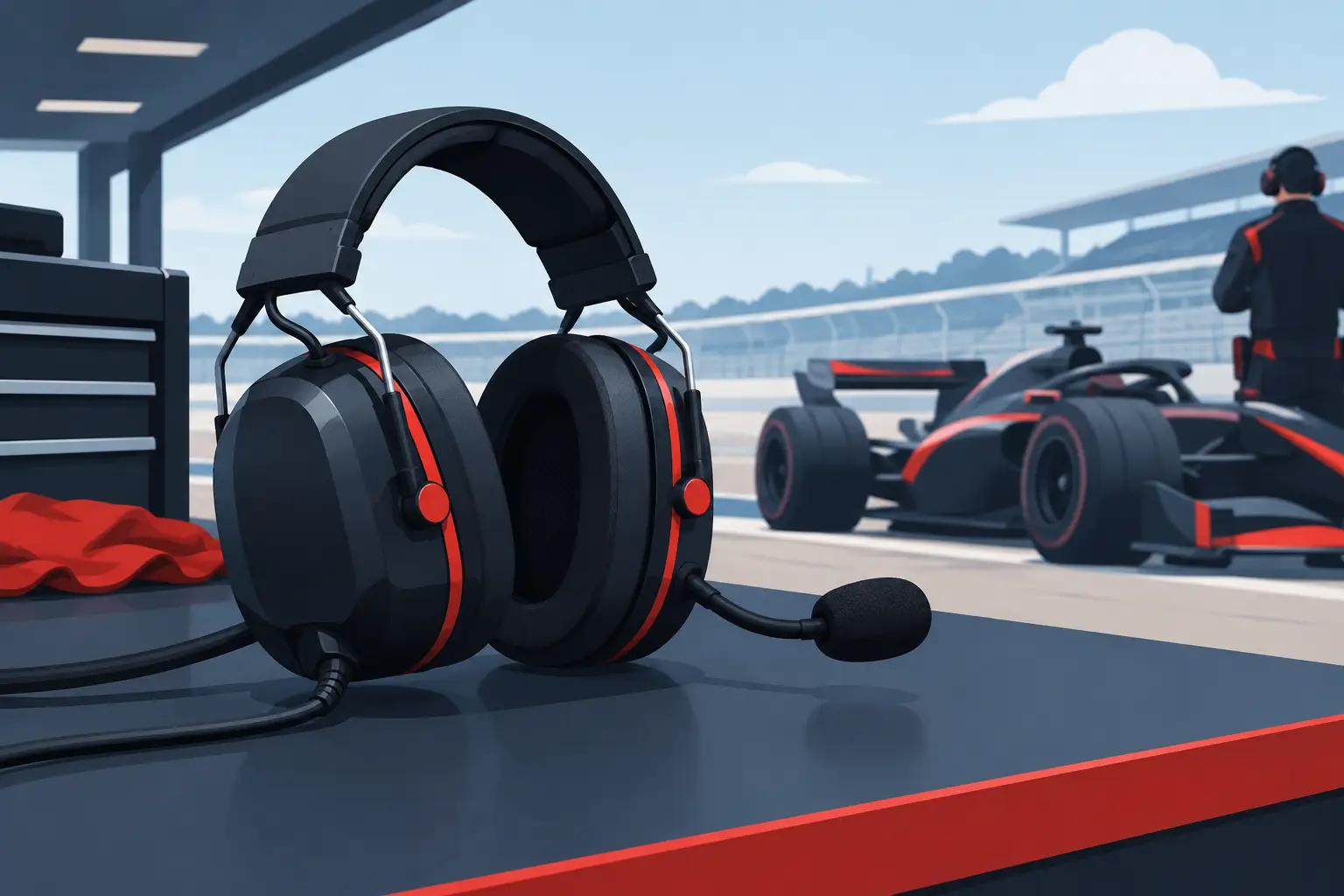
The basic requirement is intelligible two-way speech. A close-talking boom microphone helps reject surrounding engine, air-gun and generator noise, while correctly positioned earphones allow the user to hear the radio without setting the volume unnecessarily high. The microphone should sit close to the corner of the mouth, not directly in front of it, where breath noise can become a problem.
A good mechanics headset should also allow fast, deliberate transmission. Some crew members need a switch fixed to their belt or overalls; others need a hand-held push-to-talk unit for tyre work, refuelling support or moving between work areas. There is no single best position. The correct arrangement depends on whether the user must keep both hands free and whether accidental transmission would disrupt the radio channel.
Start with the existing radio system
The most expensive mistake is specifying a headset by appearance alone. A headset that physically resembles the current kit may still have a different plug, wiring order, microphone type or PTT requirement. It may produce weak audio, permanent transmit, no transmit at all, or damage equipment if connected incorrectly.
Before ordering, identify the radio brand and model, the current crew headset or PTT part number, and every connector in the path. This includes the headset plug, PTT socket, radio adaptor and any extension lead. Established motorsport systems from Racecom, Speedcom, Autotel, MRTC and Rugged Radios are not universally interchangeable simply because they use similar-looking connectors.
Connector type is only one part of the specification. Pin assignment and electrical configuration matter just as much. LEMO-based systems in particular need to be matched by series, pin count and wiring. If a team has a mixed fleet of older and newer equipment, a correctly built adaptor or custom lead may be more sensible than replacing every headset at once.
Check the complete signal path
A quick bench test is useful, but it does not replace checking the complete setup. Connect the proposed headset through the intended PTT and radio interface, then test receive audio, transmit audio and PTT operation. Confirm that the microphone does not remain live when the button is released and that the radio volume is usable in a working garage.
This is especially relevant where a crew radio kit has been adapted over several seasons. Extension leads, repaired plugs and borrowed PTT units can conceal an incompatibility until the car is on the grid. Recording the connector standard and assigning labelled spares avoids repeated guesswork at events.
Choose the wearing style for the job
The headset format should follow the crew member’s working environment. Over-head headsets offer secure positioning and consistent microphone placement. They suit personnel who spend long periods on radio, such as the chief mechanic, garage coordinator or an engineer working beside the car.
Behind-the-head designs can be preferable where a user regularly wears a cap, helmet or other head protection. A single-ear arrangement allows awareness of nearby activity, which can be useful in the garage, but it is less effective in a very loud pit lane. Dual-ear headsets give better isolation and clearer received audio, although they may reduce awareness of people and vehicles moving nearby.
For short, mobile jobs, an earpiece and lapel microphone combination may be adequate. It is not automatically the best solution for high-noise conditions. If the user is expected to communicate over running engines, compressed-air tools or a busy pit lane, a proper boom microphone and suitable hearing protection are usually the better engineering choice.
Comfort is operational, not cosmetic. A headset that clamps too tightly or shifts when the wearer bends into a cockpit will be adjusted constantly, and each adjustment changes microphone position. Look for practical features such as serviceable foam covers, a strain-relieved cable exit and a lead that reaches the PTT without catching on bodywork, tool trolleys or seat belts.
Specify PTT control deliberately
Push-to-talk is where many otherwise sound systems become awkward. A button that is difficult to locate with gloves, too easy to trigger accidentally or placed at the wrong point on the lead slows down communication when precision matters.
Belt-mounted PTT units work well for users who need both hands for wheel changes, setup work or driver assistance. A hand-held PTT may suit a crew member who is moving around the paddock and does not need to transmit continuously. Steering-wheel or vehicle-mounted switches belong to the driver side of the system and should not be confused with crew PTT hardware.
Consider cable routing at the same time. A long lead gives mobility but creates snag risk. A shorter lead is tidier but can pull at the headset when the wearer kneels or reaches across the car. The correct length is determined by where the radio is carried and where the PTT is mounted, not by a generic preference.
Audio quality depends on setup, not just the headset
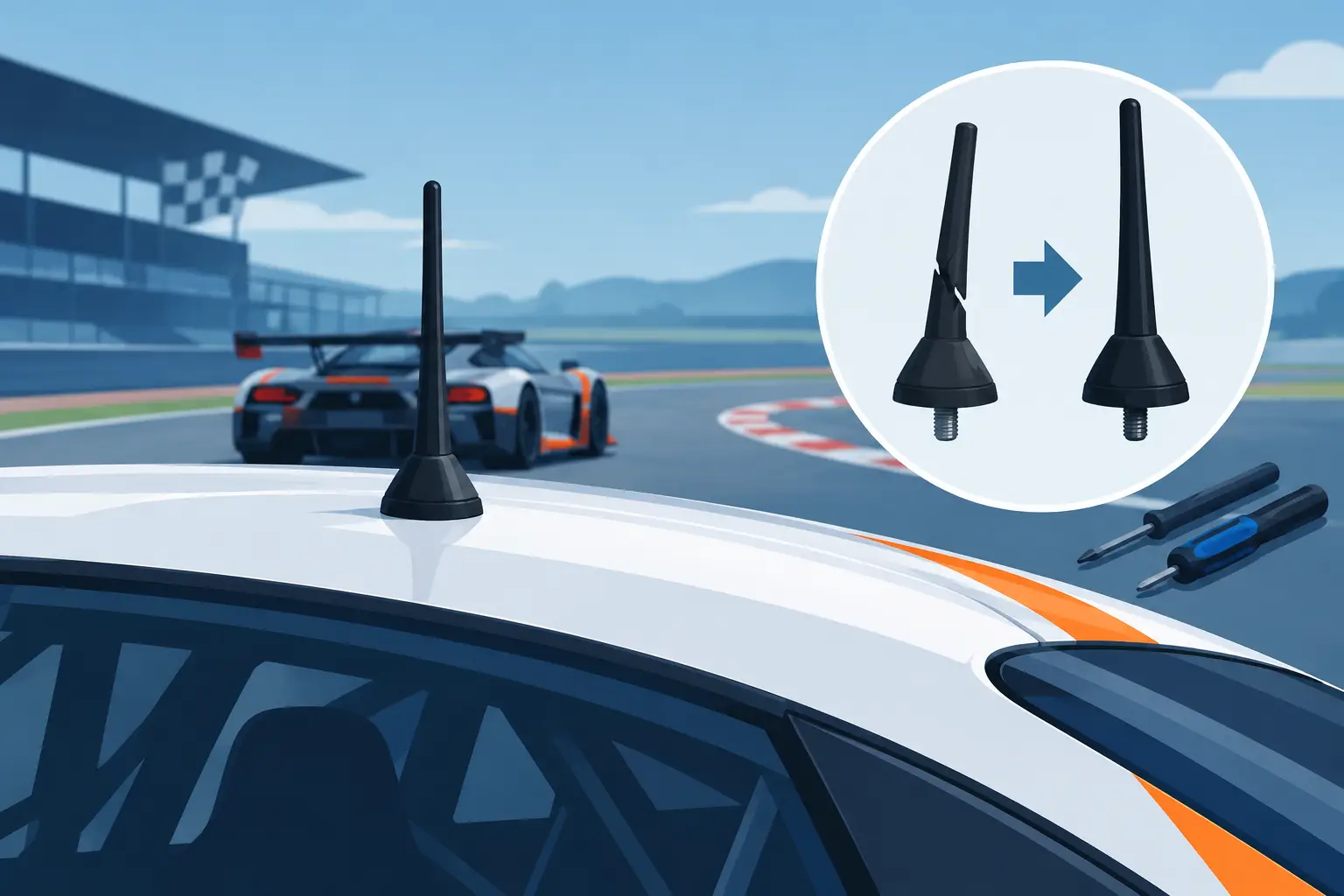
Poor crew audio is often blamed on the headset when the cause is elsewhere. Low radio battery voltage, a damaged aerial, an incorrectly set radio level, a loose adaptor or moisture in a connector can all create weak or intermittent communication. A headset replacement will not correct a fault further along the system.
Set radio volume at a useful level before a session, then position the boom microphone consistently. Teams should also agree simple radio discipline: identify the car or caller, make the message concise, and leave a short pause before transmitting if the channel has been quiet. Long, overlapping messages are difficult to understand even with excellent equipment.
Where hearing protection is required, do not treat it as an afterthought. The headset and ear protection need to work together without breaking the seal around the ear or forcing the microphone away from the mouth. Test the exact combination in the conditions where it will be used.
Serviceability and spares matter at the circuit
Motorsport communications equipment has a hard working life. Leads get trapped in doors, plugs are pulled by the cable, foam microphone covers deteriorate and connectors collect dust or moisture. A headset with a damaged lead can turn into a radio fault at exactly the wrong moment.
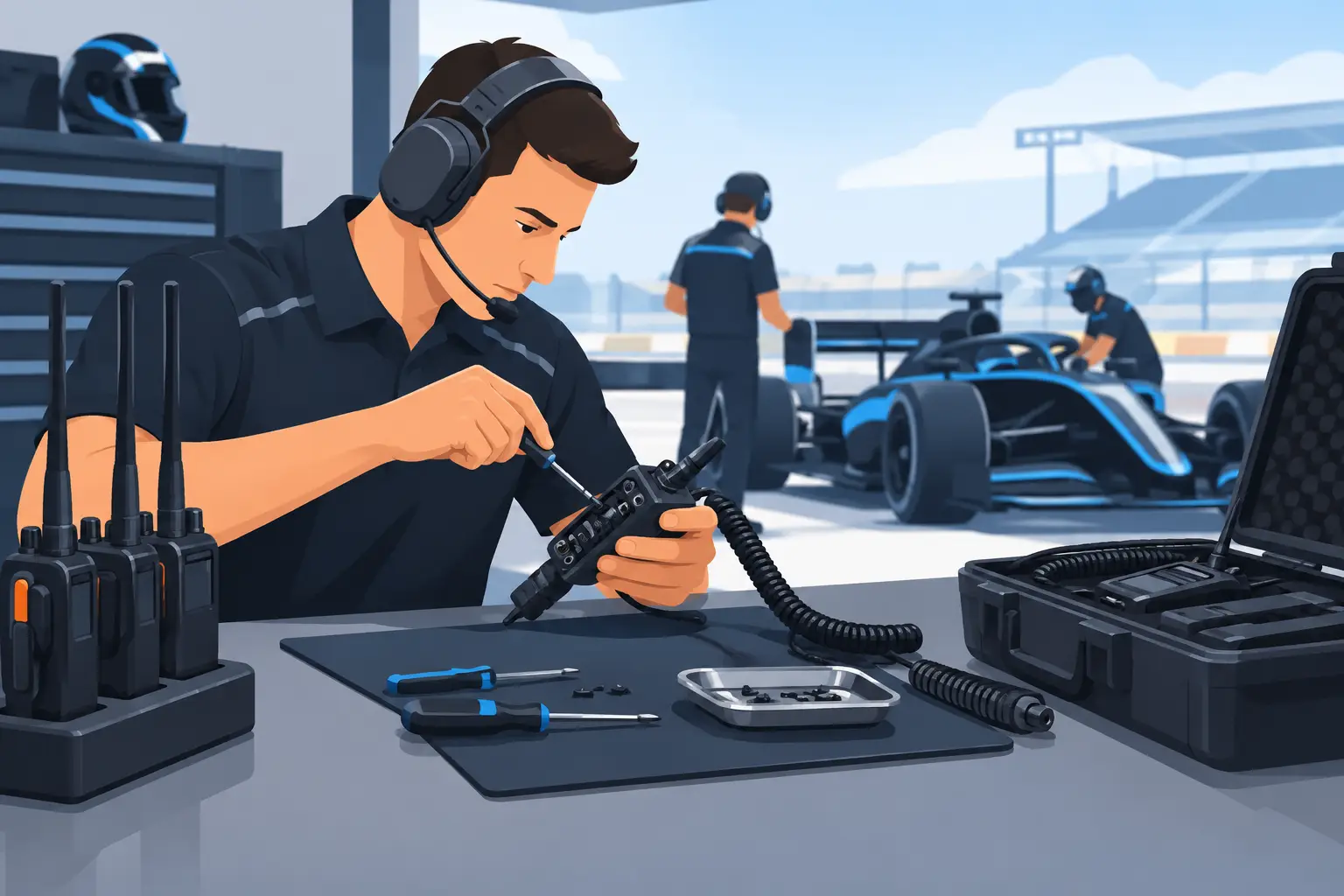
Inspect headsets before each event. Check for cracked plug housings, loose strain relief, bent pins, split cable jackets and a boom that no longer holds position. Clean connectors carefully and fit protective caps where appropriate. Do not use tape as a permanent repair on a critical communications lead; it can hide a developing failure and make later diagnosis harder.
Carry one known-good spare headset and PTT for each radio standard in use. This is more useful than carrying several untested miscellaneous parts. When a fault occurs, substitute the spare methodically to establish whether the problem is in the headset, PTT, radio, aerial or vehicle interface.
For older Racecom, Speedcom, Autotel, MRTC or Rugged Radios equipment, servicing and repair can be a practical alternative to replacing a complete system. It also preserves compatibility with installed car looms, helmet kits and crew equipment where a wholesale change would introduce unnecessary cost and risk.
Build a system the crew can operate under pressure
The best mechanics headset is the one that integrates cleanly with the team’s radio architecture, remains comfortable through a full day and can be replaced quickly if damaged. Standardising connectors, PTT placement and spare parts across the crew reduces confusion when the garage is busy and personnel change roles.
Radios4Racing can assist with complete crew radio kits, replacement mechanics’ headsets, LEMO-based components, adaptors and equipment servicing where compatibility needs to be confirmed. Specify the radio model, existing connector type and intended use before selecting hardware. A few minutes spent checking those details in the workshop is far better than trying to solve a communications fault on the grid.