A missed pit instruction is rarely caused by the radio unit alone. A Racecom radio repair service should assess the complete signal path: radio, headset, push-to-talk switch, helmet loom, car interface, aerial, power supply and every connector between them. In a noisy cockpit or busy pit lane, a marginal fault can look like poor reception until vibration, heat or a damaged lead turns it into a complete communications failure.
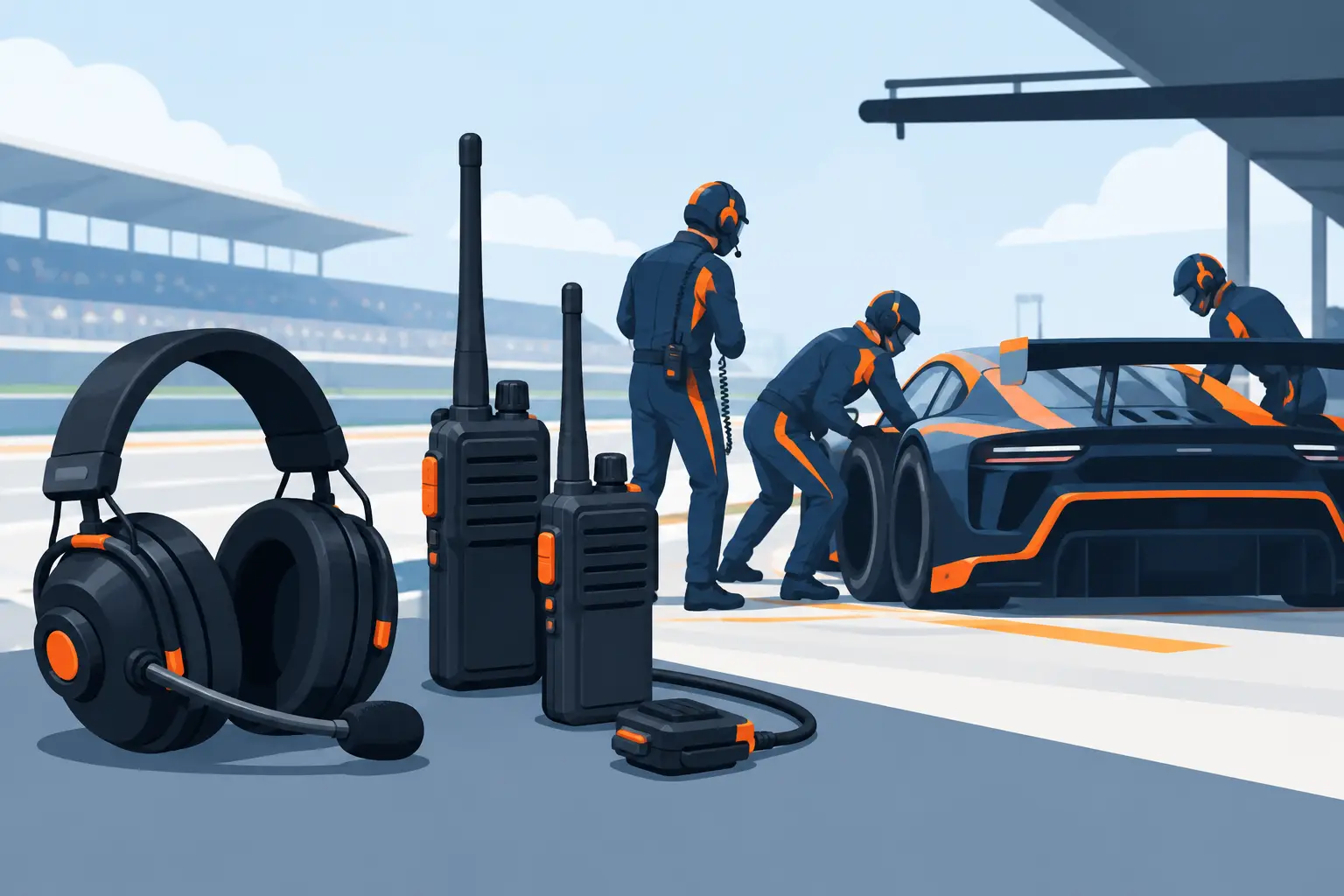
For race teams, reliable radio equipment is operational hardware, not a convenience. It supports driver feedback, safety calls, strategy changes and the coordination of mechanics during qualifying and race sessions. Repairing established Racecom equipment can often be the sensible option where the system is already correctly installed, matched to the team’s headsets and wired around a proven car configuration.
When a Racecom radio repair service is the right route
The first decision is whether the problem is genuinely within the radio or somewhere else in the installation. Replacing a radio because audio is intermittent can be expensive and ineffective if the actual cause is a strained LEMO connector, moisture in a helmet lead, a failed push-to-talk switch or poor aerial earth.
Repair is usually worth considering when the radio has previously performed correctly, the rest of the system uses compatible Racecom components, and the fault is repeatable. Common examples include no transmit, weak or distorted receive audio, intermittent power, damaged controls, loose sockets and units that cut out after vibration or temperature rise.
It is less straightforward when a radio has suffered serious impact damage, corrosion across multiple connections or an obsolete configuration that no longer suits the car. A repair may restore the unit electrically, but it cannot automatically resolve an installation designed around unsuitable cabling, poor antenna placement or mixed connector standards. The practical answer depends on the condition of the equipment, the age of the system and the cost of returning it to dependable race use.
Do not diagnose from one symptom
A driver hearing the pit but being unable to reply points towards a different fault path from a radio that neither transmits nor receives. Similarly, crackle that appears only when the engine is running may indicate electrical noise, grounding or power filtering rather than a failed microphone or loudspeaker.
Before booking equipment servicing, note exactly when the issue occurs. Record whether it is present with engine off, engine running, car stationary and car moving. Check whether it affects one headset or every crew position. This information reduces unnecessary parts replacement and helps isolate the fault faster.
Typical faults in motorsport radio systems
Motorsport communications work in an environment that is hard on connectors and cable assemblies. Heat, vibration, repeated helmet removal, hurried pit-lane handling and regular vehicle strip-down all create failure points. The radio may be the visible item, but the fault can be in any component connected to it.
A competent inspection will normally consider the following areas:
- radio power input, fusing and vehicle supply voltage;
- antenna, aerial cable and connector condition;
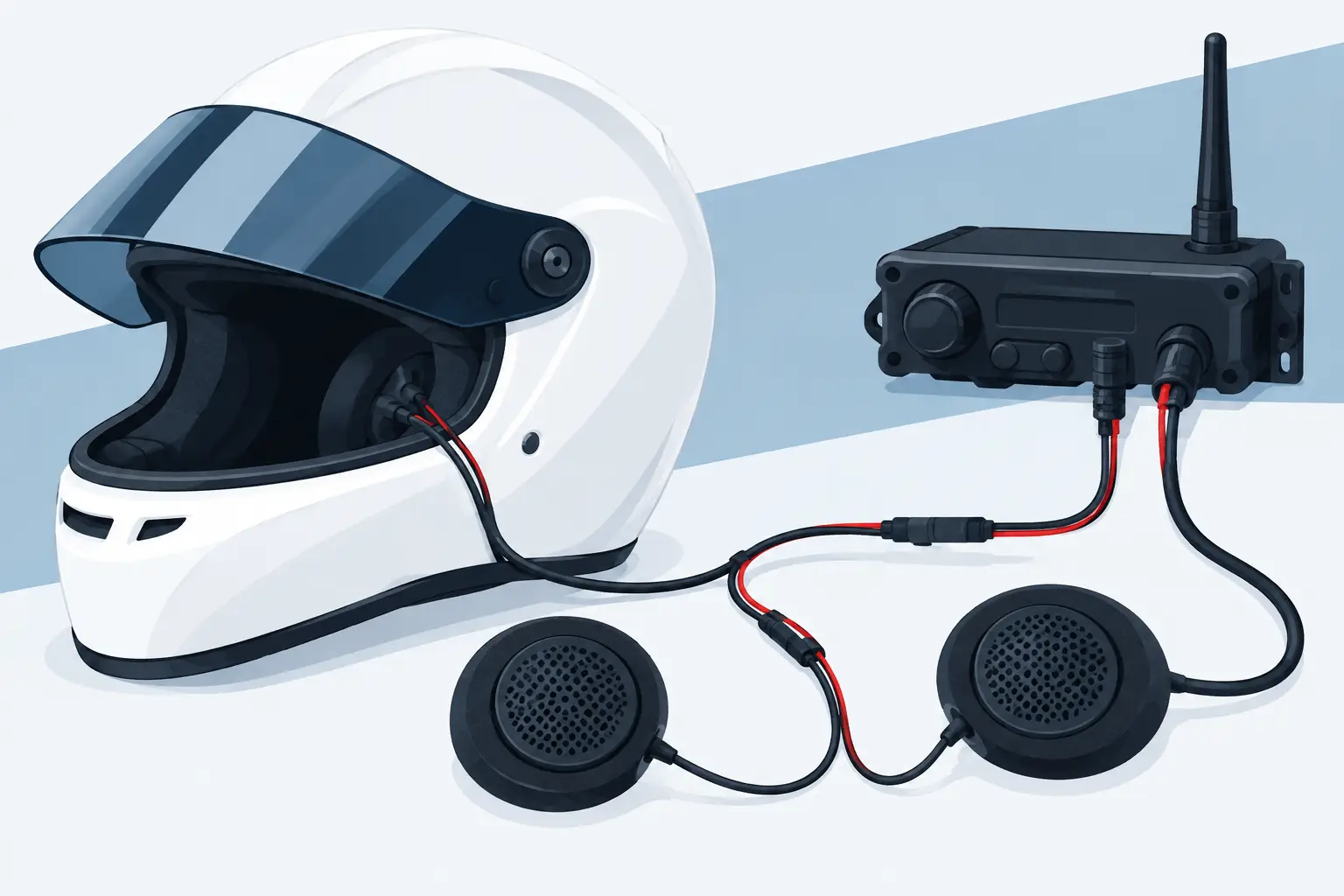
- microphone, speaker and helmet communication loom;
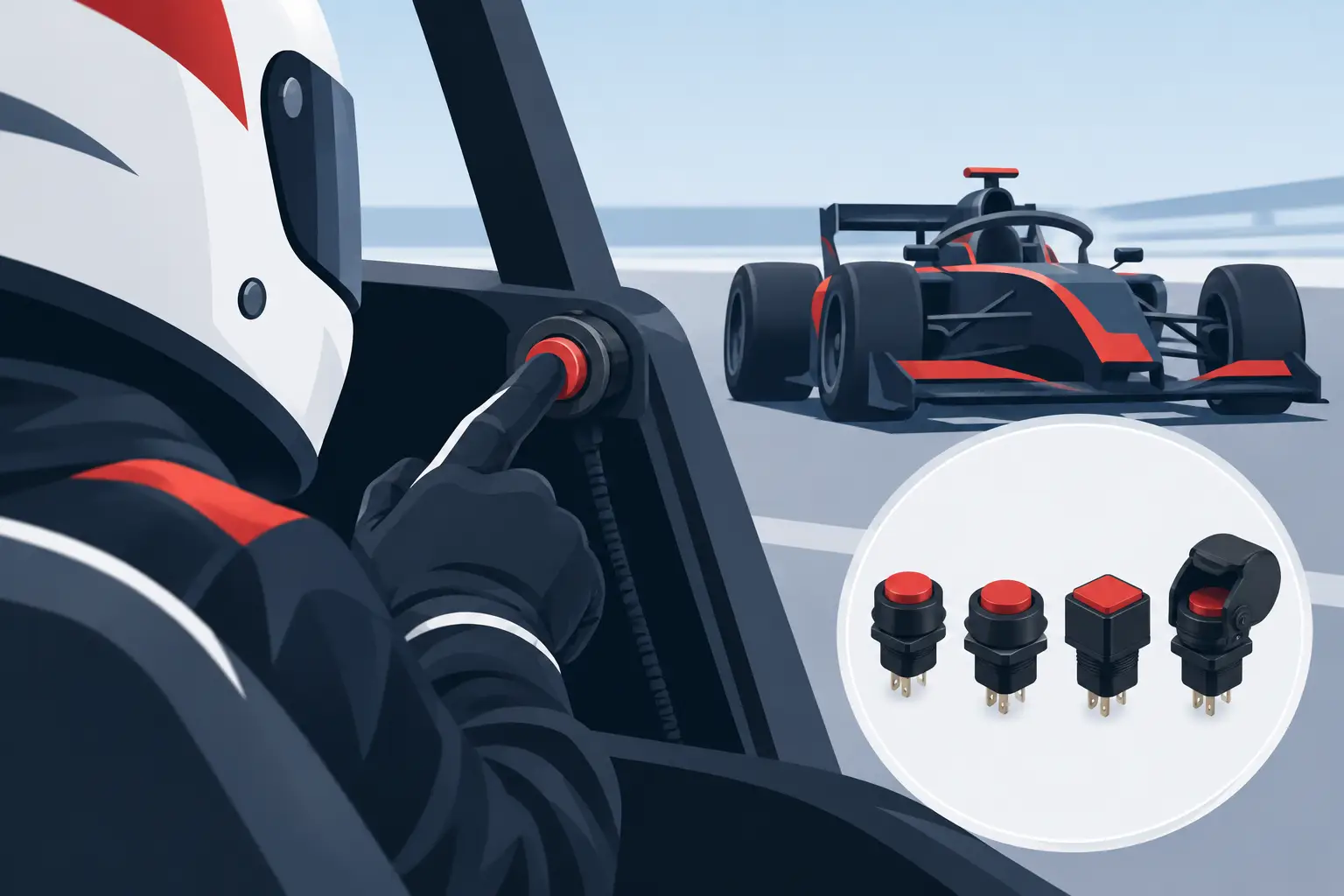
- push-to-talk switch operation and lead strain relief;
- car interface wiring, earth paths and connector pin condition;
- radio controls, channels, settings and receive/transmit performance.
Damaged connector pins deserve particular attention. A pin that has been pushed back into a shell, bent during installation or contaminated with dirt can create intermittent audio that disappears during bench testing. The same applies to cable breaks near boots and strain reliefs. These faults often show only when the harness is moved in the direction it sees in the car.
What proper Racecom equipment servicing should include
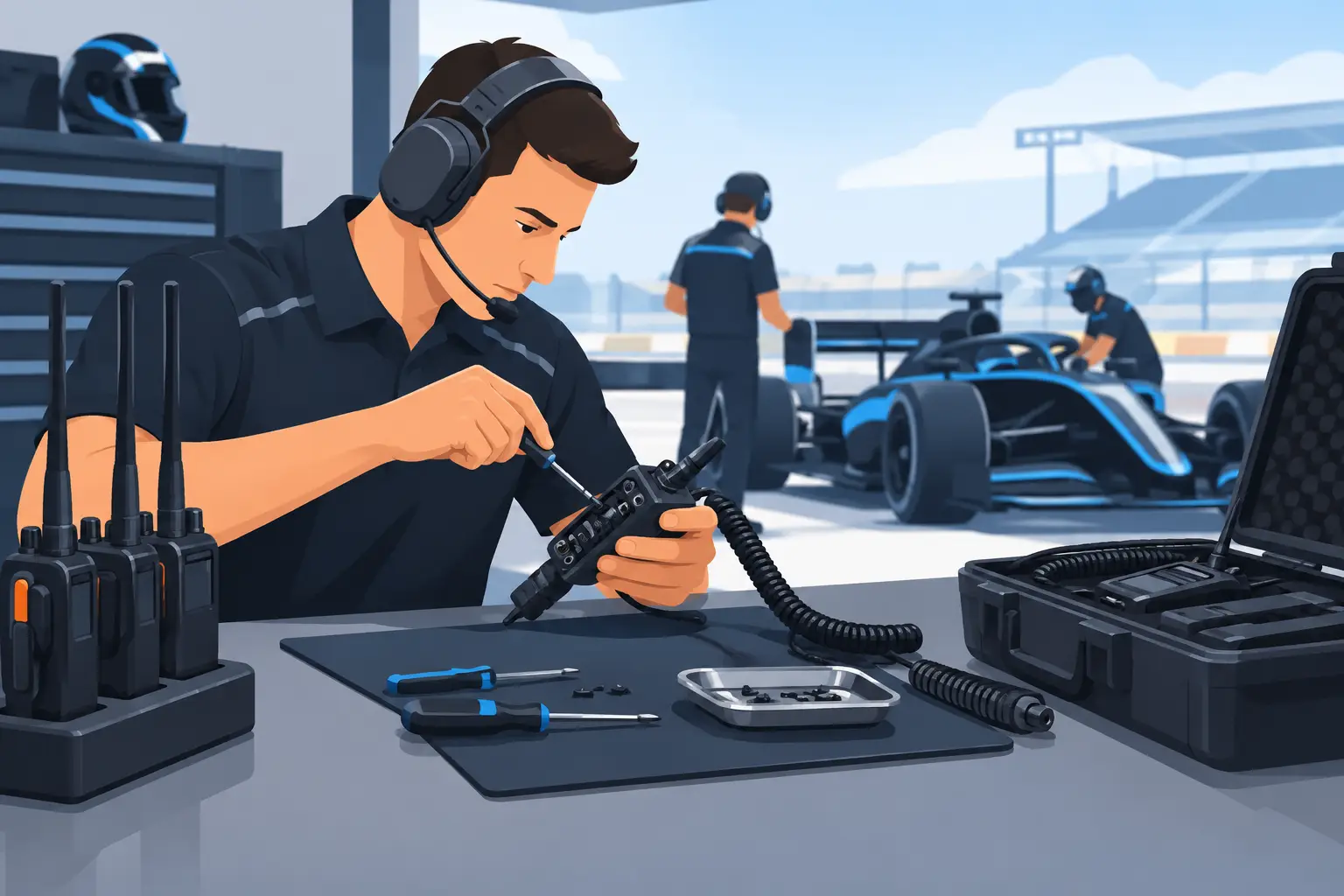
A repair process should begin with inspection and fault finding, not an assumption that the main radio needs replacing. The unit should be checked alongside the relevant accessories where possible. Sending only the radio may be appropriate for an obvious physical issue, but it limits diagnosis when the problem occurs only with a particular headset, PTT or in-car harness.
Functional testing should confirm stable power-up, receive audio, transmit operation, microphone modulation, control response and connector integrity. Where the fault is installation-related, the service work may identify the problem without any internal repair being required. That is still a useful outcome: it prevents the team from returning an apparently repaired radio to the same failing loom.
If internal work is needed, the goal is not merely to make the unit switch on. It is to return it in a condition suitable for race use. That means checking that sockets retain their plugs securely, controls operate consistently and audio remains clear rather than simply present. On a crew system, intelligibility under noise matters more than a basic bench indication that sound is passing through.
Radios4Racing supports equipment servicing and repair for recognised motorsport communications brands, including Racecom, Speedcom, Autotel, MRTC and Rugged Radios. That brand-specific knowledge matters because connector types, wiring conventions and system layouts are not interchangeable simply because the plugs appear similar.
Send the complete fault picture with the equipment
A concise fault description can save time and avoid an inconclusive test. Include the radio model, vehicle type, equipment age where known, and whether the issue is on transmit, receive or both. State which accessories are fitted: helmet kit, crew headset, car interface, extension cable, PTT switch and antenna arrangement.
If there has been a recent trigger, include it. The fault may have followed a heavy kerb strike, wet event, battery change, cockpit refurbishment or replacement helmet loom. These details help distinguish a progressive component failure from an installation issue introduced during other work.
Pack radio equipment so it cannot move in transit. Protect knobs, sockets and aerial connectors, and do not leave a heavy cable connected if it can place leverage on a panel-mounted connector. If sending associated leads for testing, label them clearly. A team may own several similar harnesses, but one known-fault cable mixed into the box can make the result harder to interpret.
Repair, replacement or system upgrade?
A repaired Racecom radio is often the best value option where the team has invested in a compatible, well-installed system. It keeps familiar operation, avoids rewiring the car and retains compatibility with existing headsets and helmet assemblies. This is especially relevant where a car has custom wiring or LEMO-based components built around a specific connector arrangement.
Replacement becomes more attractive when failures are repeated, several associated cables are near the end of their life, or the team requires features that the existing equipment cannot provide. A new radio alone may still create a false economy if it requires adaptors, new harnesses or different crew equipment. Review the full system cost, including installation time and spares held at the circuit.
For a car undergoing a major rebuild, it can be sensible to repair the radio while renewing vulnerable consumables such as headset leads, PTT assemblies, aerial cable and connectors. This preserves the proven core equipment while removing the items most likely to be damaged by handling and vibration.
Checks before the car leaves for an event
A post-repair test should be carried out in the vehicle, not just on a workshop bench. Confirm that the radio powers from the car supply, both transmit and receive paths work with the driver’s helmet fitted, and the PTT can be operated with gloves. Test at realistic engine conditions where possible, as ignition noise and alternator interference may not appear with the engine stopped.
Also check the practical details that cause last-minute problems: channel settings, battery condition in portable crew units, antenna security, spare earpieces and the routing of cables around belts, seat movement and quick-release steering wheels. A clear radio call is of limited value if the driver cannot reach the switch or the helmet lead is pulled tight at full steering lock.
Keep a small record of repairs and replacements against each car. It need not be elaborate. Recording the radio serial number, harness fitted, fault found and date tested makes it easier to spot recurring issues and helps prevent a damaged lead being returned to service as an unexplained spare.
The most useful repair is one that restores confidence before the next session, not one that merely gets a unit through a quick check. Treat the radio, wiring and helmet connection as one race-critical system, and test that system in the conditions where it has to perform.