A missed call at the pit wall is rarely just an audio problem. It can mean a driver arrives at the box on the wrong lap, a tyre decision is delayed, or a crew member works without the information needed to prepare the car. A properly specified pit crew radio system gives the team a controlled communications path between driver, pit lane, garage and engineering position when noise, speed and pressure are at their highest.
For race teams, the requirement is not simply to buy radios. The system has to suit the number of users, the vehicle installation, the connector standard already in use and the conditions in which it will operate. A club racer running a two-person crew has different needs from an endurance team with separate tyre, fuel, engineering and management roles.
What a pit crew radio system must do
At its core, the system should provide clear, dependable, controlled communication. That sounds straightforward, but race environments expose weak equipment quickly. Engine noise, air tools, generators, wind, pit-lane traffic and helmet noise all compete with speech. Consumer handsets and general-purpose headsets may work in a quiet paddock, then become difficult to use when the car is running and the crew are working.
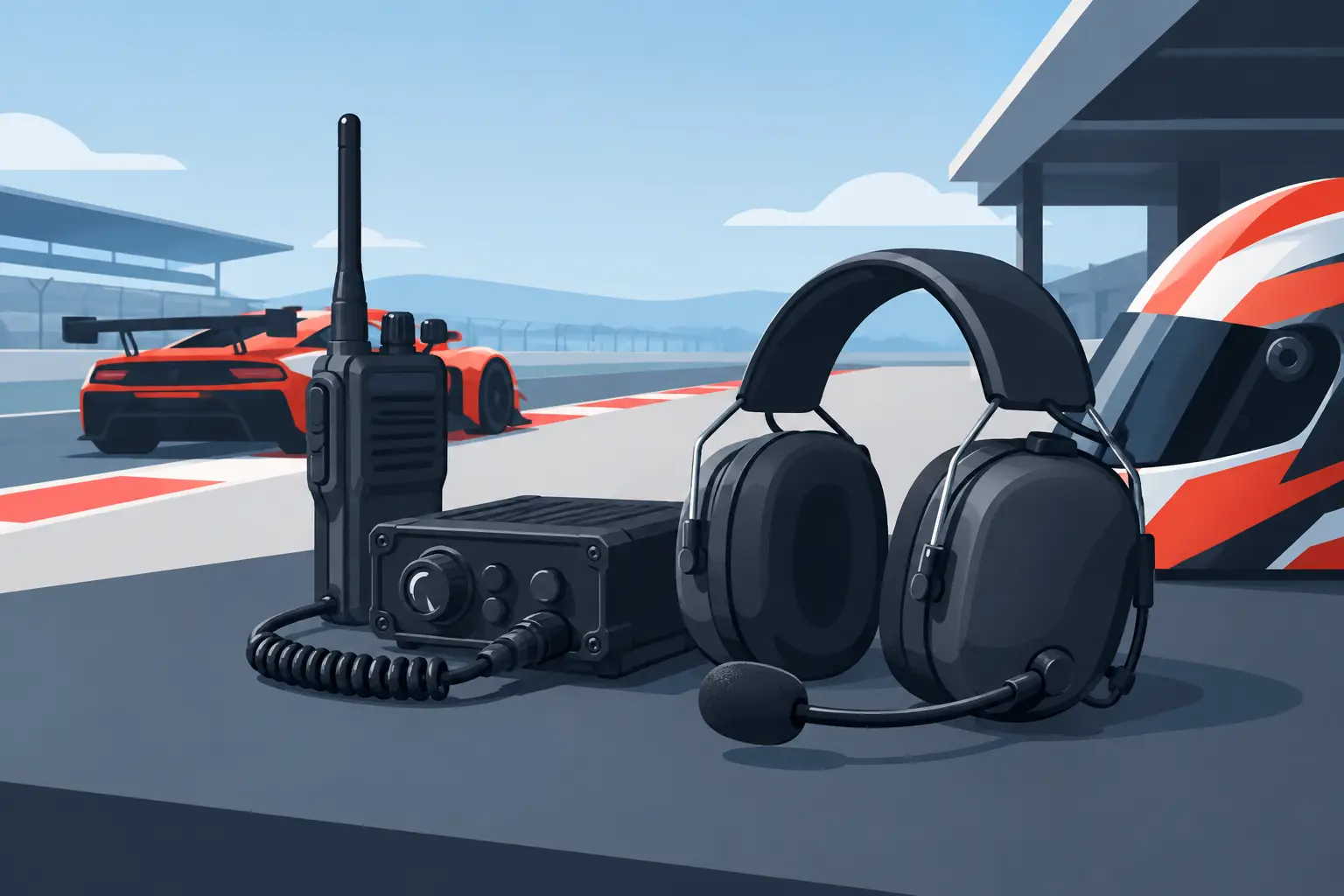
A race-ready setup normally consists of four connected elements:
- Vehicle radio and driver interface, including helmet connection, push-to-talk and correctly terminated loom.
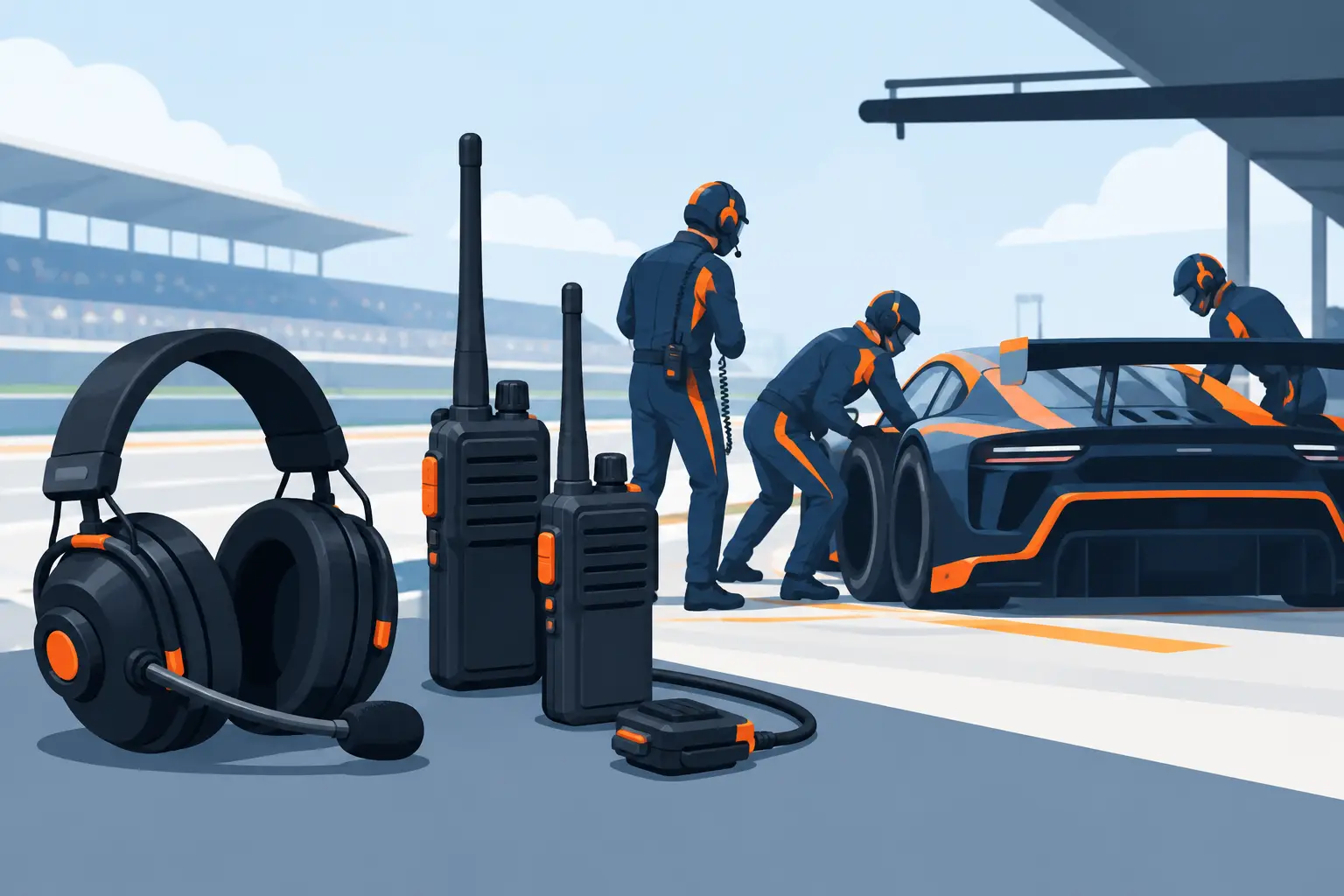
- Crew portable radios with suitable batteries, chargers and channel programming.
- Noise-attenuating crew headsets or earpieces with microphones positioned correctly for clear speech.
- Antennas, extension leads, connectors and adaptors that match the radios, installation and operating environment.
Every element affects the result. A quality radio cannot compensate for a damaged aerial cable, a poorly seated connector or a microphone sitting too far from the speaker’s mouth. Equally, a high-specification helmet kit is of little use if it is wired for a different connector family from the car interface.
Start with the communication plan, not the handset
Before selecting equipment, define who needs to talk, who needs only to listen, and where they will be positioned. This prevents a common purchasing mistake: buying several radios first, then discovering that the crew need headsets, splitters, extra push-to-talk switches, vehicle leads or a second charging solution to make the system practical.
For a sprint race operation, the driver, team manager and one or two crew members may all share a single channel. The priority is immediate driver-to-pit communication and reliable pit-lane coordination. For endurance racing, the structure is often more controlled. Engineering may need a dedicated channel, while tyre and fuel personnel require their own working channel or monitored communications without unnecessary traffic.
There is a trade-off. More channels can keep critical conversations clear, but they also add radios, programming requirements and the possibility that someone is listening to the wrong group. The right arrangement is the simplest one that gives each working group the information it genuinely needs.
Driver-to-pit communication
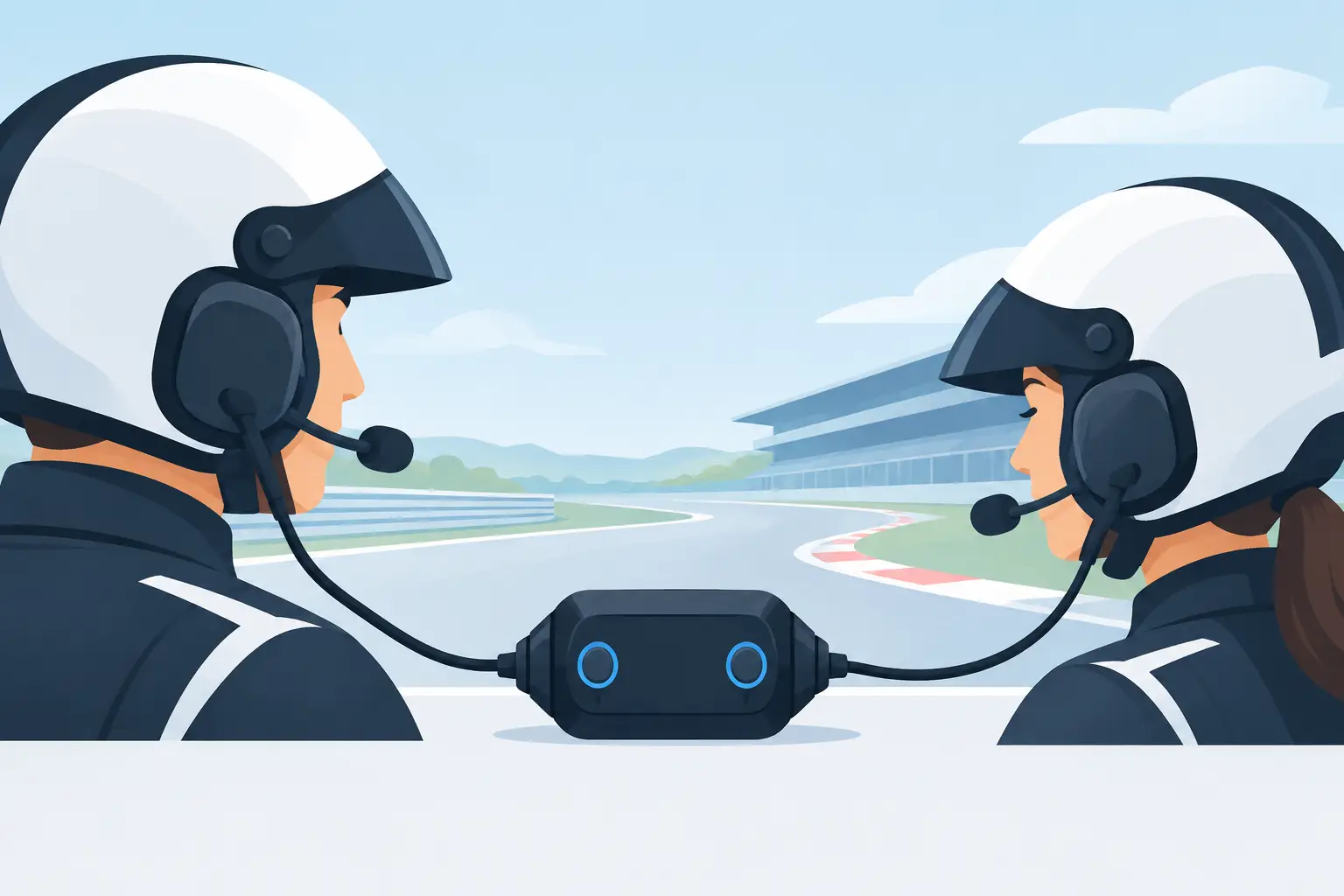
The driver connection is the part of the system that experiences the most vibration and repeated use. Helmet kits need to fit the helmet properly, use a suitable microphone type and provide a dependable connection at the car. A push-to-talk switch must be easy to operate with gloves and positioned so it cannot be activated accidentally during steering inputs.
Consider how the driver enters and exits the car. A connector located where it is pulled, trapped by the door or fouled by harness movement will eventually fail. The wiring route should be secured, protected from heat and kept clear of sharp edges. Motorsport-grade LEMO-based components are widely used for good reason: they provide a positive connection and are available in configurations suitable for integrated car and helmet systems. However, the mating connector, pin allocation and wiring standard must be checked before ordering.
Crew communication in high-noise areas
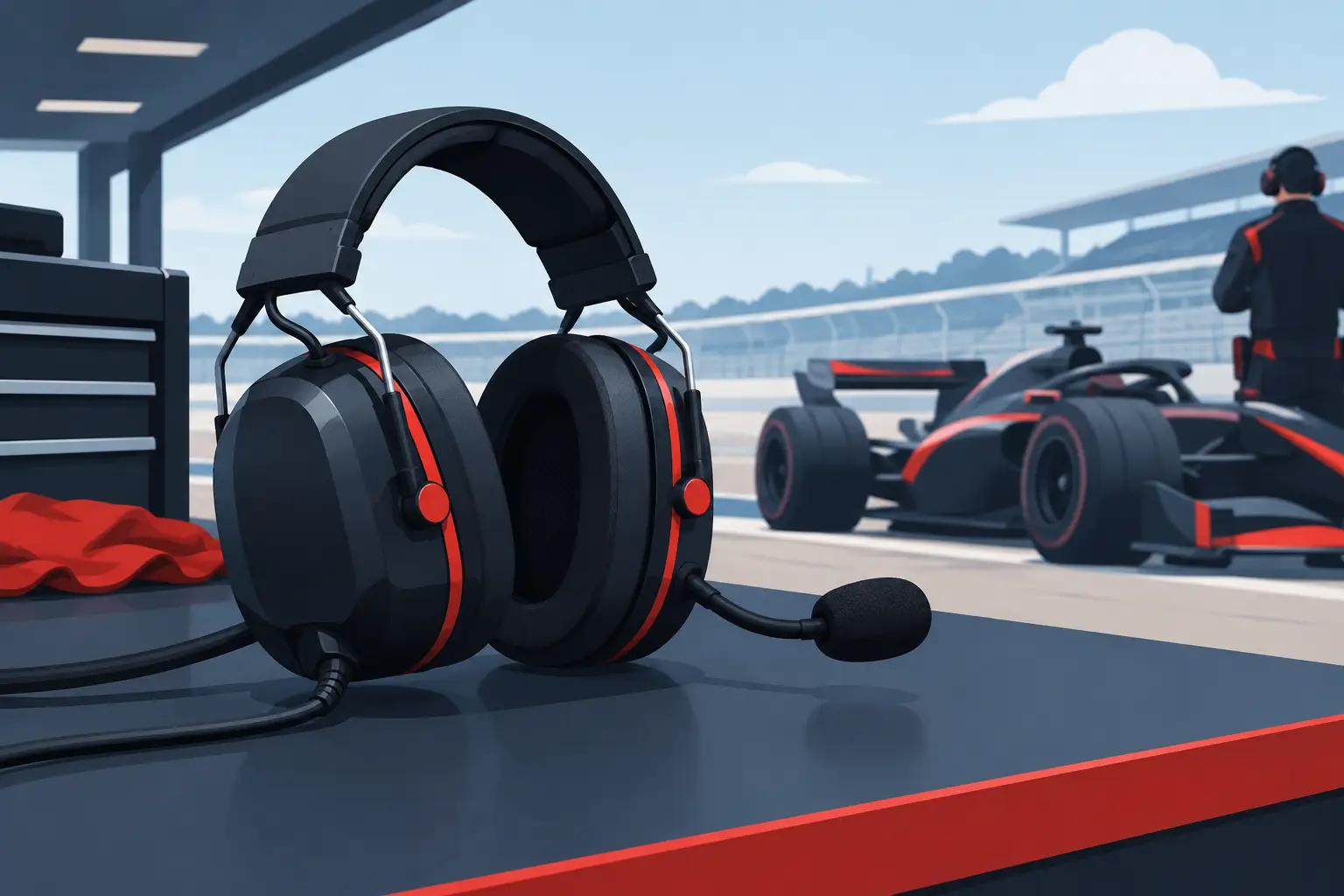
The crew headset is not an accessory. It is working equipment. Mechanics and tyre personnel need hearing protection, intelligible audio and a microphone that rejects as much surrounding noise as possible. A headset that is comfortable for ten minutes may become distracting during a long race day, particularly when users are wearing glasses, ear defenders or wet-weather clothing.
Over-the-head headsets give stable positioning and are often the practical choice in the garage and pit lane. Lightweight earpieces can suit a team member who needs to move freely or monitor a channel discreetly, but their effectiveness depends heavily on surrounding noise and the user’s role. For personnel working near running cars, proper noise reduction and secure fit generally matter more than minimum bulk.
Compatibility is where most system problems begin
Race communications equipment is not universally interchangeable. Connector styles may appear similar while using different pin layouts, microphone wiring or impedance. A lead made for one brand or radio family may physically connect to another item but provide poor audio, no transmit function or damage if wired incorrectly.
Check compatibility across the full chain: radio model, crew headset, helmet kit, push-to-talk, car interface, extension cable and aerial. This is especially important where a team has built its equipment over several seasons. Existing Racecom, Speedcom, Autotel, MRTC or Rugged Radios hardware may be serviceable and worth retaining, but the new item must match the established system or be adapted correctly.
Do not assume that a generic adaptor is the answer. An adaptor can be useful where it has been specified for the exact application, but it introduces another connection point and another potential failure location. Where possible, use correctly built leads of the required length and connector type rather than chaining multiple adaptors together.
Vehicle installation details that affect radio range
Poor range is often blamed on the radio when the installation is the real cause. The antenna location, earth plane, cable condition and connector termination all affect transmission and reception. An aerial mounted in a compromised position, hidden by bodywork or installed on a poor earth can reduce usable coverage significantly.
The vehicle radio should be mounted where it is protected from water, vibration and accidental impact, yet remains accessible for inspection. Wiring should be fused correctly and routed separately from high-current ignition, alternator and fuel-pump wiring where practical. Electrical noise can enter an improperly installed system and show up as whining, clicking or intermittent audio.
Antenna cable deserves the same care as any other critical loom. Avoid crushing it under panels, kinking it around tight bends or leaving it unsupported where vibration will fatigue the connector. If the car has suffered a heavy kerb strike, contact or extensive strip-down, inspect the aerial and cable before the next session rather than waiting for a range issue to appear.
Specify for the event, not just the car
A pit crew radio system suitable for local circuit days may need a different approach for rallying, endurance racing or multi-car testing. Rally teams may require communications that work over greater distances and through changing terrain. Endurance teams need battery rotation, spare headsets and clear procedures for handing radios between shifts. A multi-car operation may need separate channels, disciplined call signs and a designated person controlling communications.
Venue rules also matter. Frequency licensing and permitted radio use vary by country, championship and circuit. Teams should confirm the relevant requirements before an event, particularly when travelling across Europe. Radio programming should be completed and tested before arriving at the circuit, with approved channels recorded as part of the event preparation paperwork.
Testing and servicing are part of reliability
The best time to find a damaged microphone, weak battery or intermittent connector is in the workshop, not during qualifying. Carry out a proper function check before each event: charge every battery, inspect headset cables, confirm push-to-talk operation, test the driver helmet lead and verify transmit and receive quality at a realistic distance.
It is also sensible to keep the parts most likely to stop a system working: a spare battery, charger, headset, aerial, extension lead and the relevant connector adaptor. For a professional operation, these are not optional extras. They are low-cost insurance against losing communication because of a single worn lead.
Established equipment can often be repaired rather than replaced. Servicing can identify cable fatigue, connector wear, failed switches and audio faults before they become event-ending failures. Radios4Racing supports recognised motorsport communications brands with equipment servicing and repair, which is particularly useful for teams maintaining an existing fleet rather than replacing every component at once.
Build a system your crew can use without thinking
Clear operating practice is as valuable as clear audio. Keep calls brief, use agreed terminology and avoid everyone transmitting at once. Drivers need concise information they can act on immediately. Crew members need confirmation of instructions, not a running commentary over the working channel.
Label radios, chargers and spare batteries. Keep helmet leads and vehicle connectors protected when the car is not in use. If a fault appears intermittently, remove the suspect item from service and investigate it properly rather than relying on it for another session.
A well-chosen radio system disappears into the routine of the event. The driver hears the call, the crew receive the instruction and the equipment continues working lap after lap. That is the standard worth specifying for.